
1.これまでの以下1、2、3をおさらいして、新しくプロジェクトを作成します。
- WinFormsアプリを作成して、NuGetパッケージを使ってCefSharpを追加する。
- プラットフォーム構成を変更して、AnyCPUで使用できるようにする。
- CefSharpを使って、通常のブラウザを表示する。

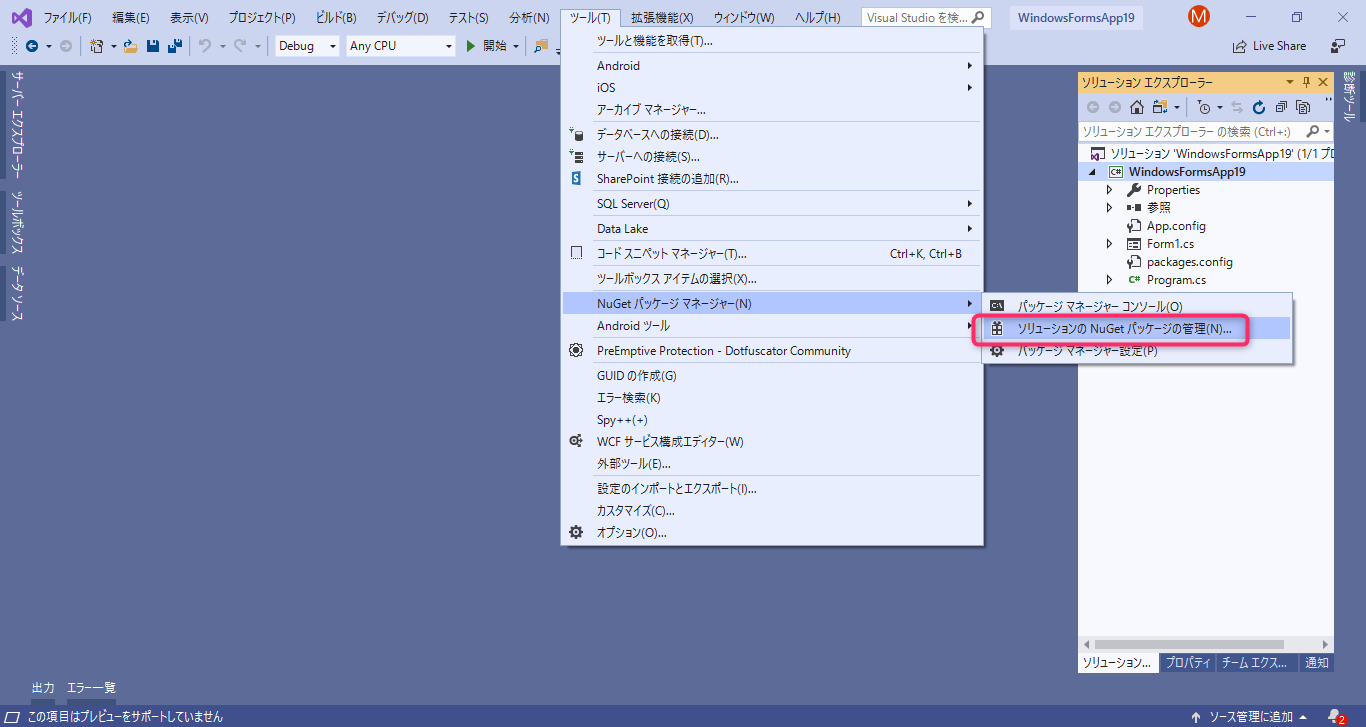
2.メニュー「ツール(T)」-「NuGet パッケージ マネージャー(N)」-「ソリューションのNuGetパッケージの管理(N)…」を選択します。
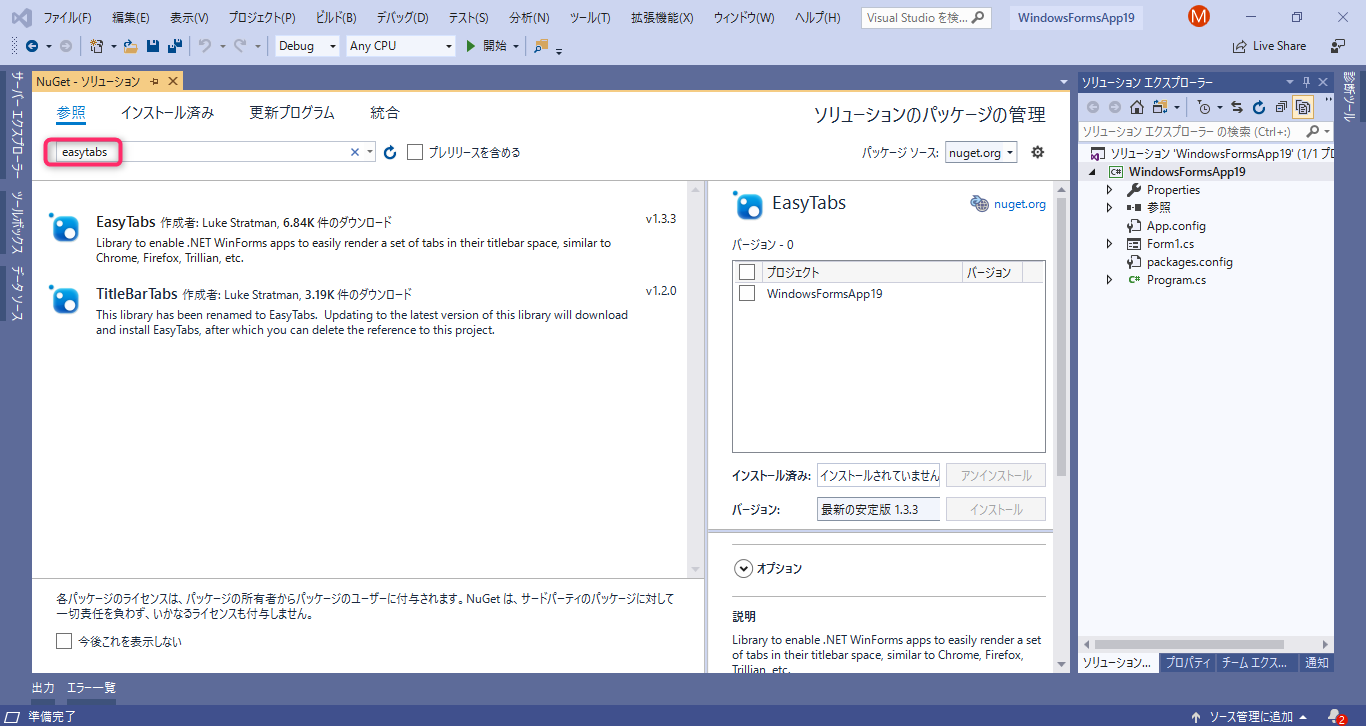
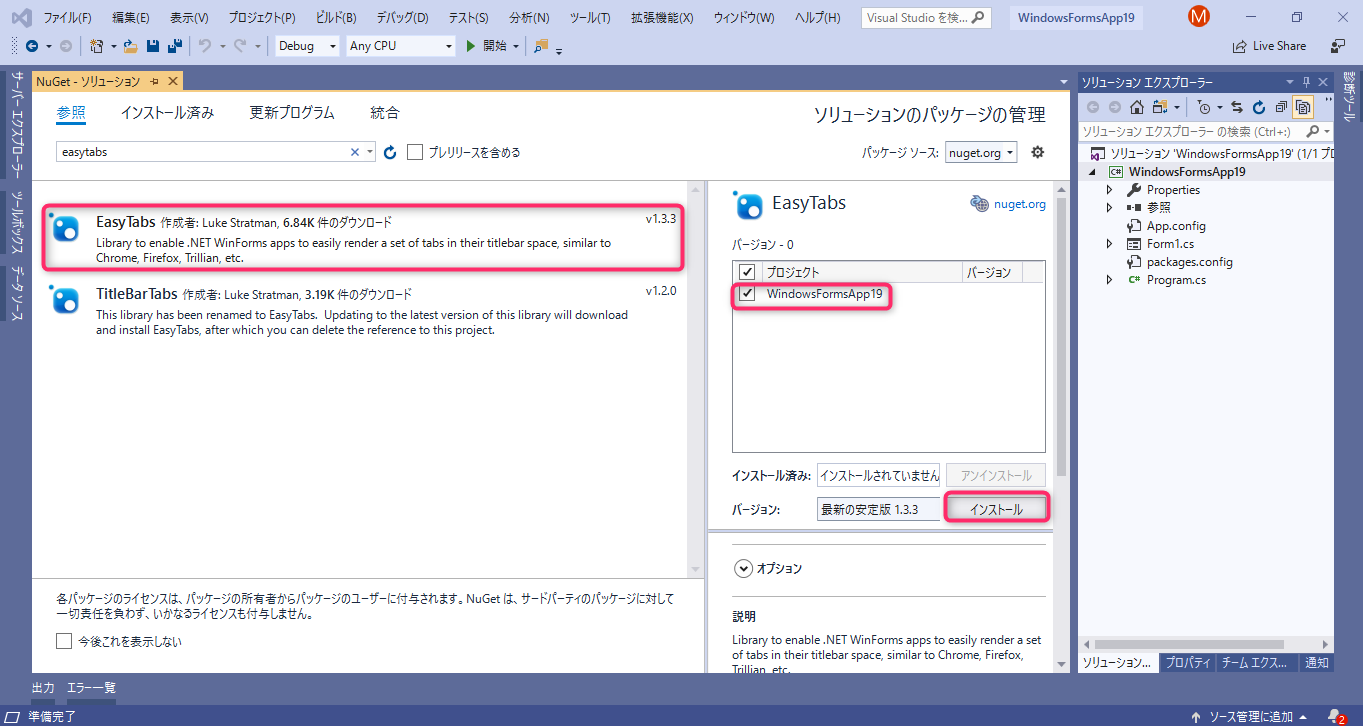
3.左上の「参照」をクリックして、検索欄に「easytabs」と入力して検索を行い、検索結果の中から「EasyTabs」を選択して、現在のプロジェクトにインストールします。
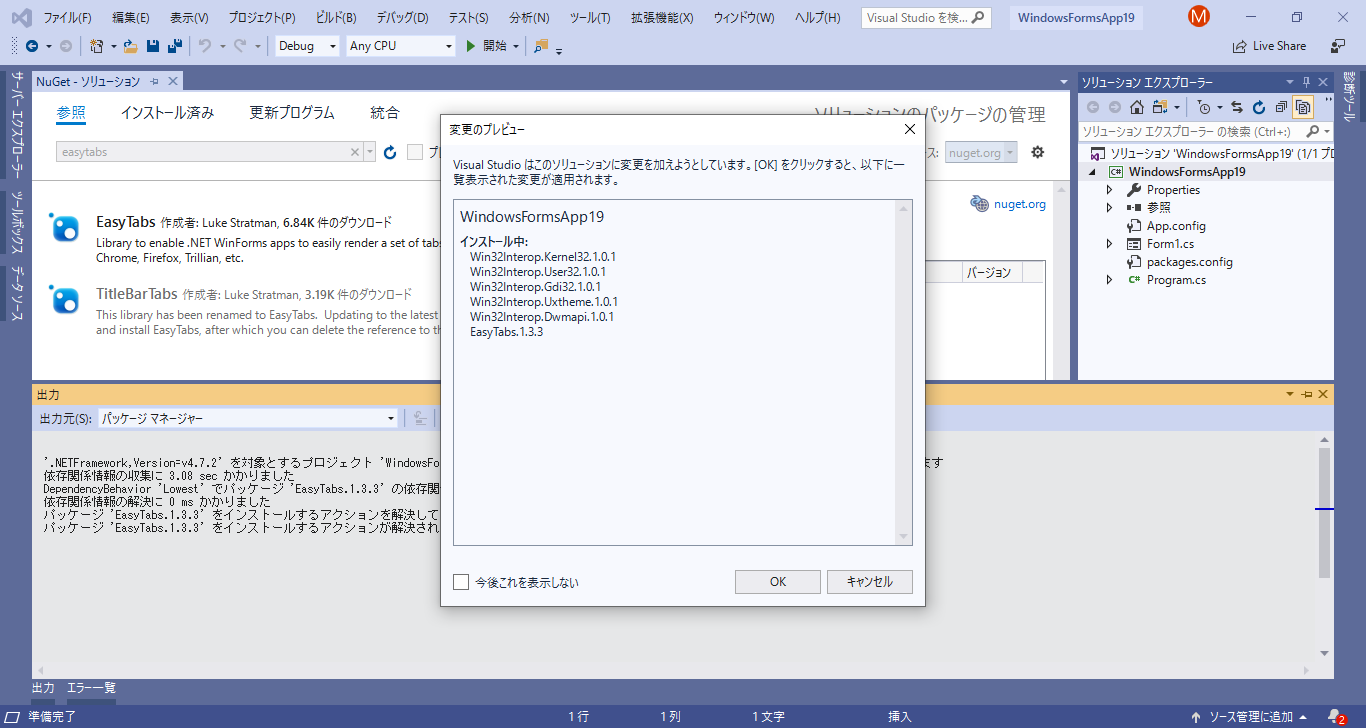
4.下画面で「OK」をクリックします。
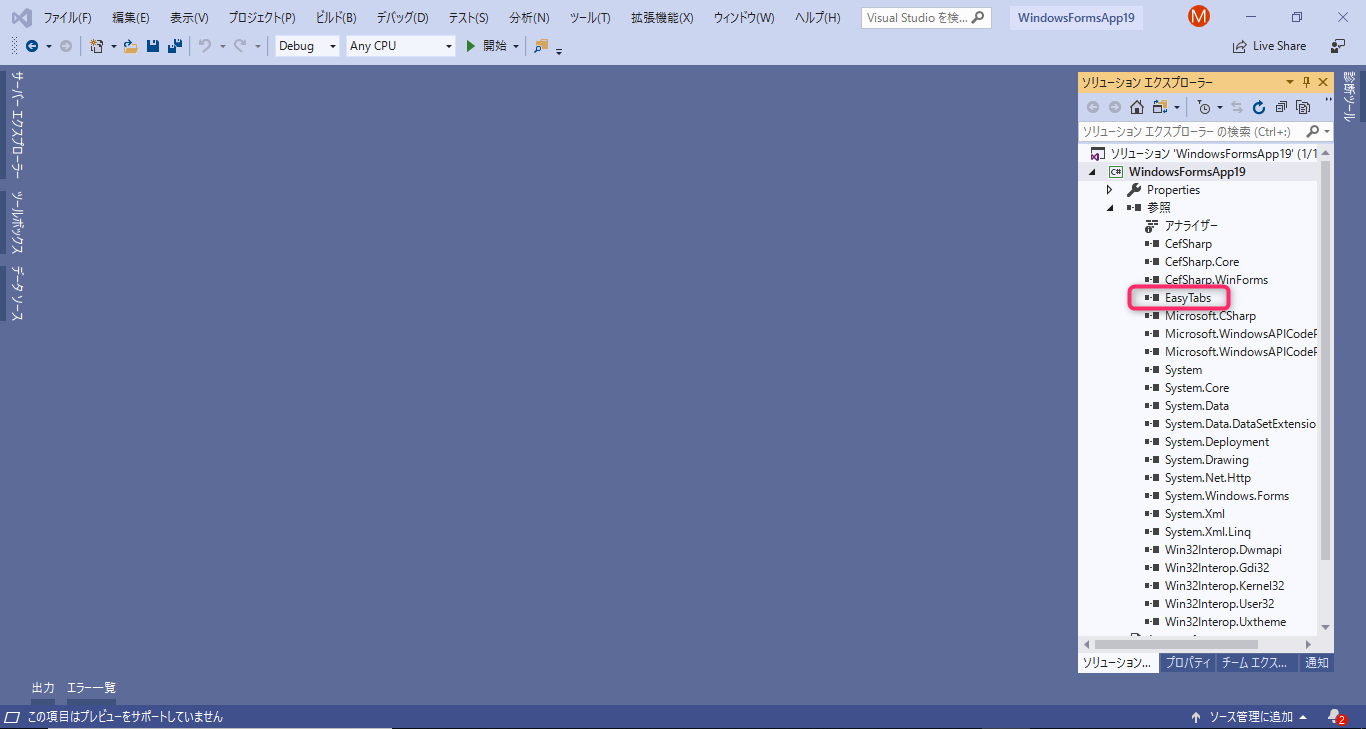
5.インストールが終わると、プロジェクトの参照に「EasyTabs」が追加されます。
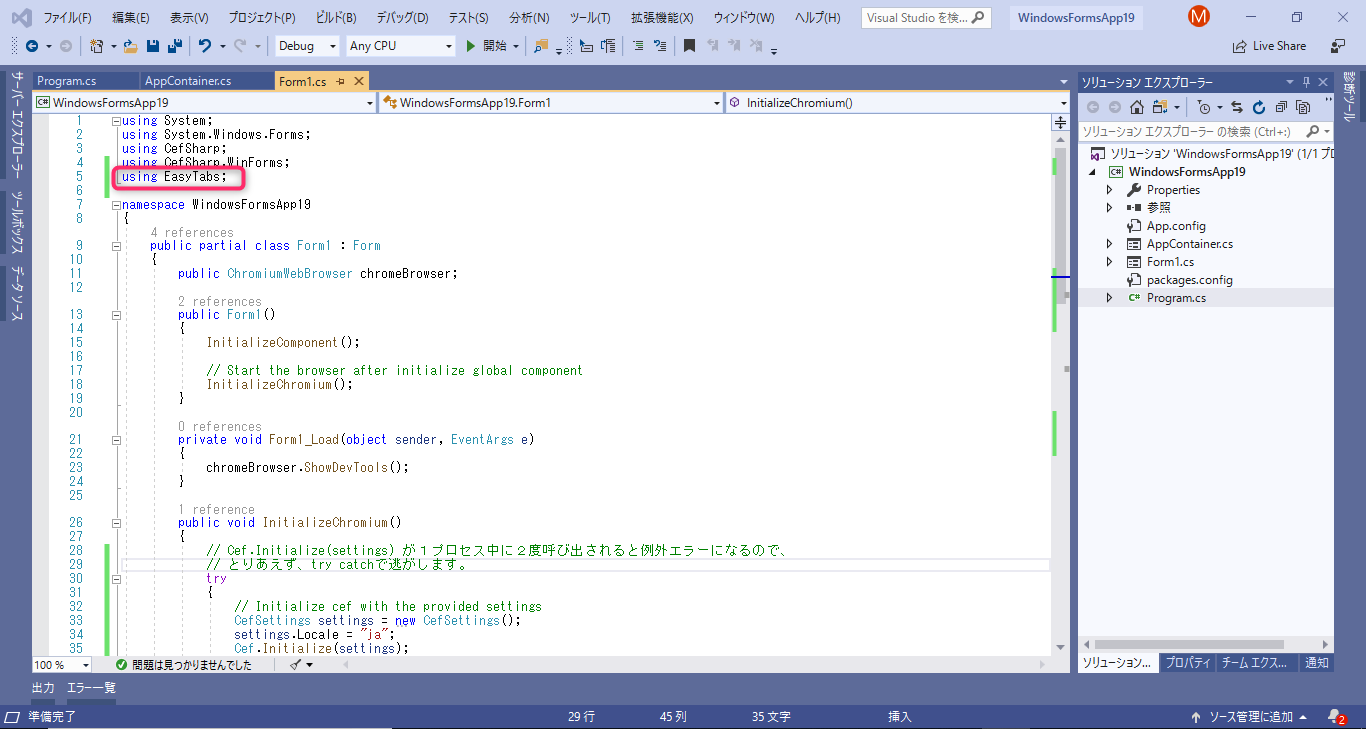
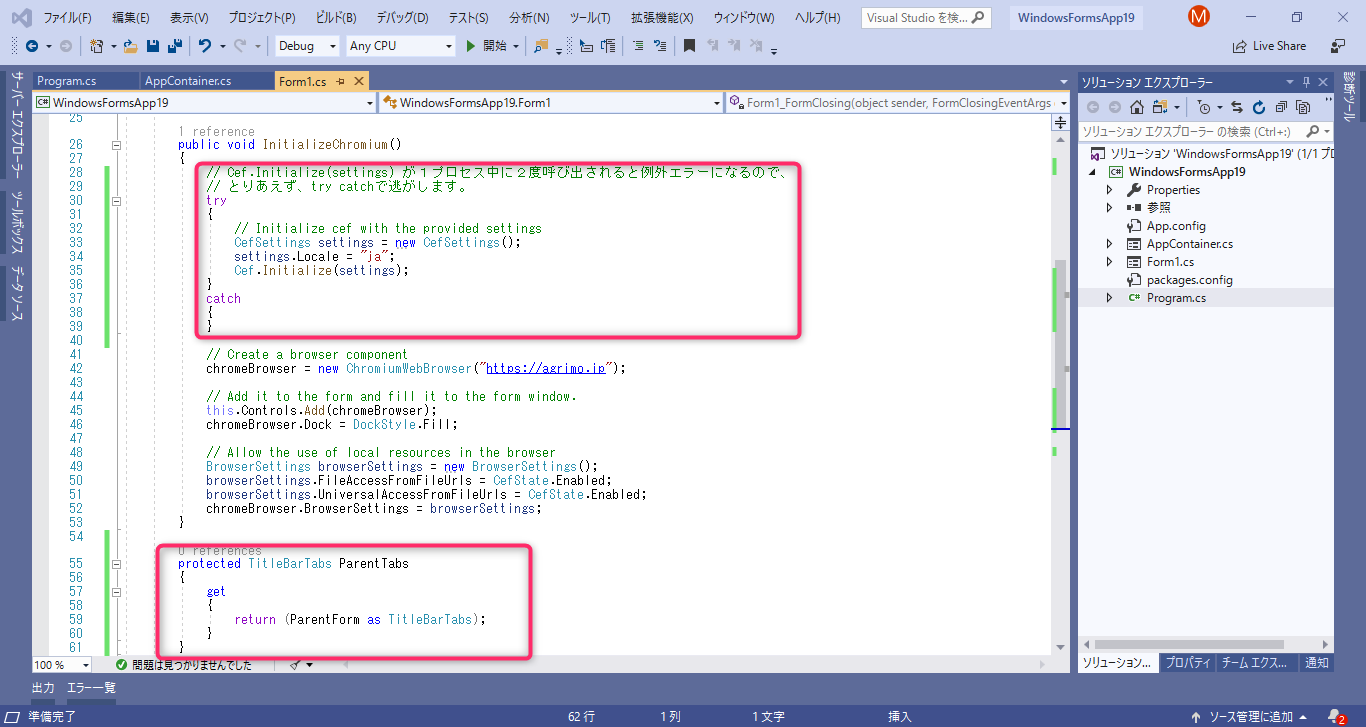
6.フォーム(Form1.cs)を変更します。
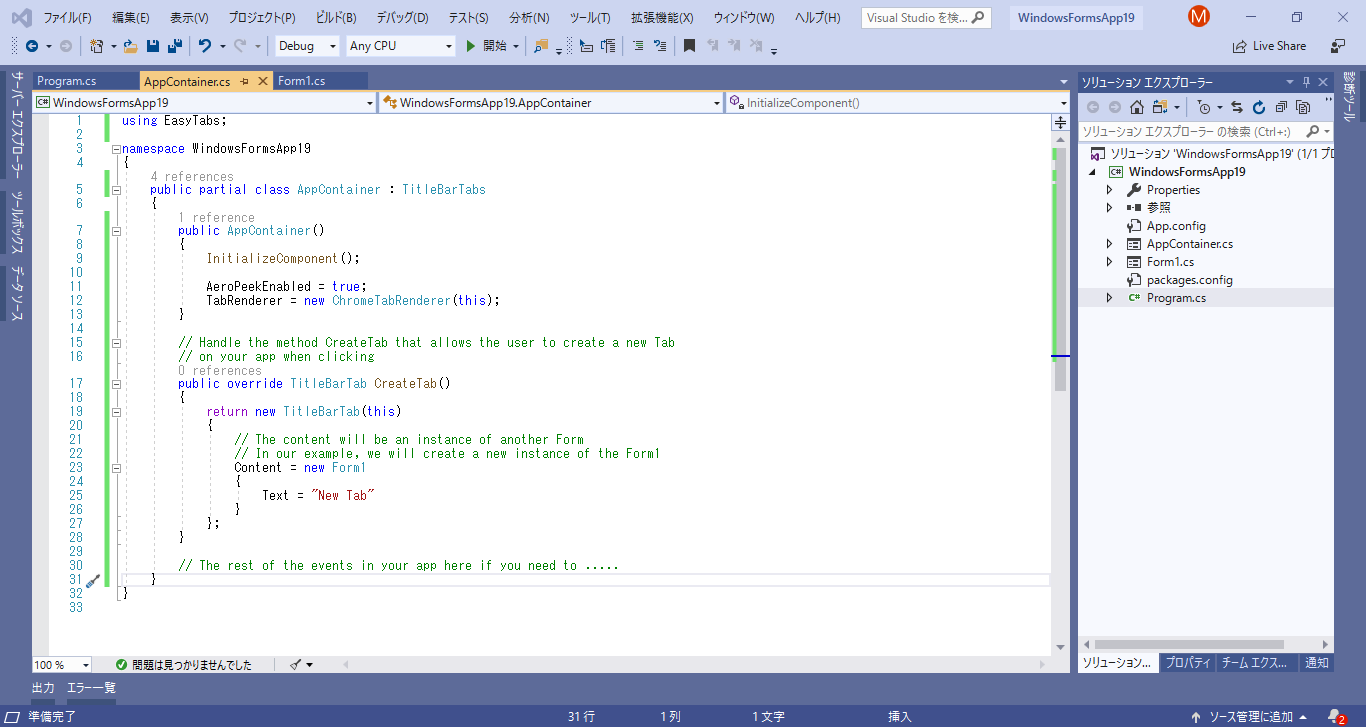
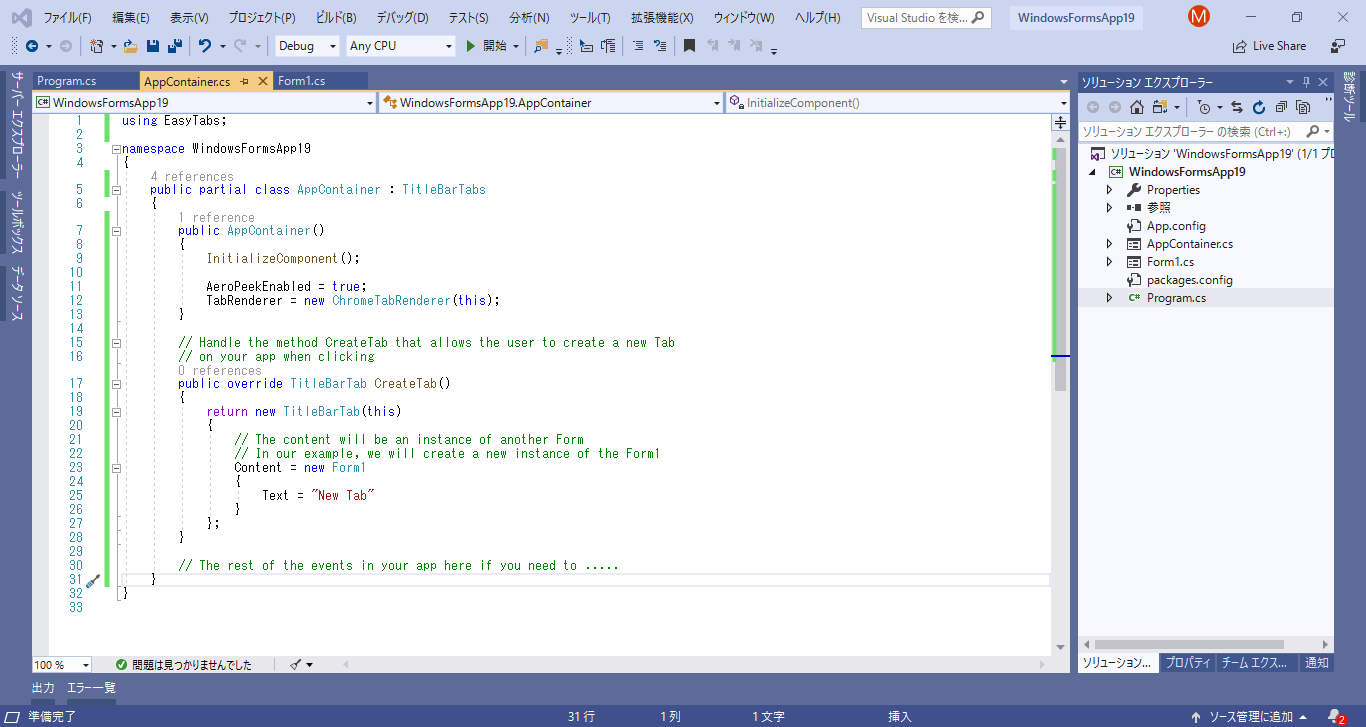
7.フォーム(AppContainer.cs)を追加します。
新規フォームを追加し、継承元クラスを Form から TitleBarTabs に変更します。
このフォームをデザイナーで開くと、以下のように例外エラーになりますが、動作には問題ありませんのでこのまま使用します。
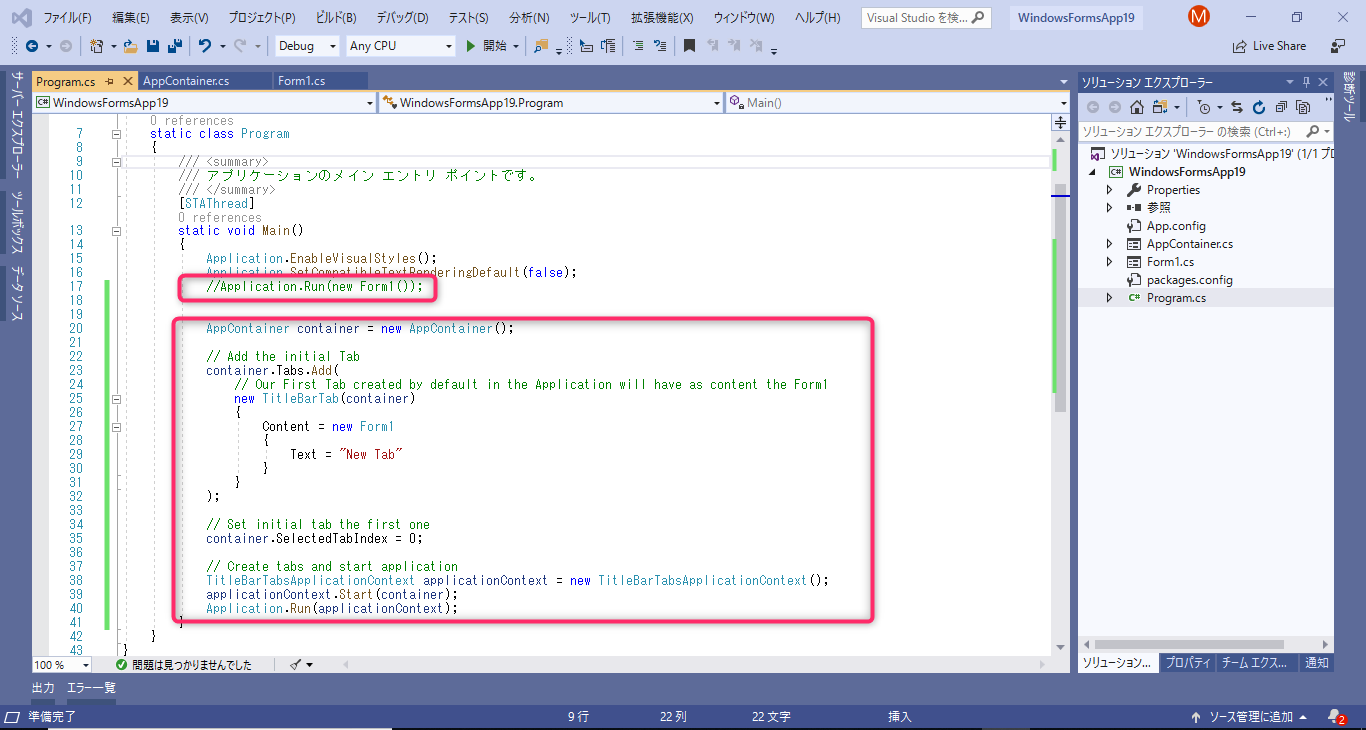
8.ソース(program.cs)を変更します。
プログラムエントリポイントを Form1 から AppContainer に変更します。
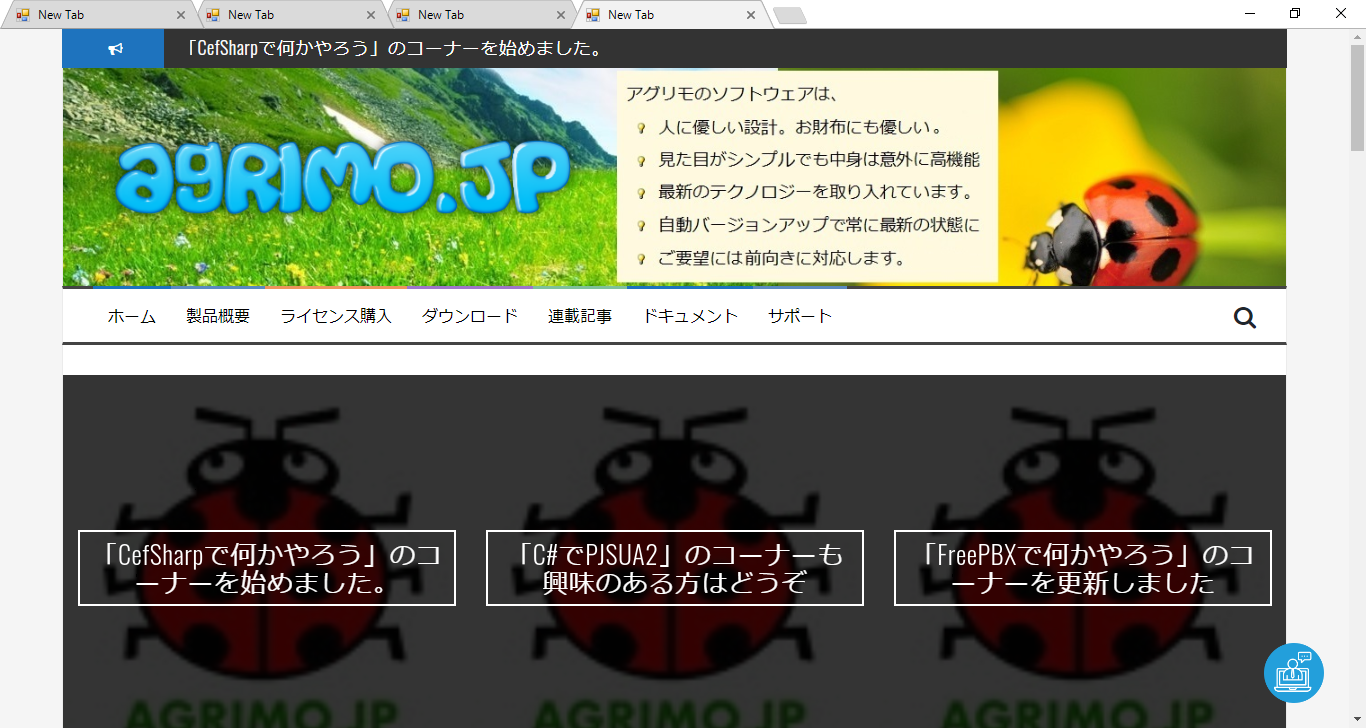
9.ここまで出来たら、実行してみます。TABブラウザになっていたらOKです。
尚、本来、タブブラウザを作る際は、以下の考慮も必要です。(ここでは省略します。)
- ブラウザからのNewWindowイベントを検知して、新しいタブを作成する。
- 新しいタブにCookie情報を継承させる。
【フォーム(Form1.cs)】
using System;
using System.Windows.Forms;
using CefSharp;
using CefSharp.WinForms;
using EasyTabs;

namespace WindowsFormsApp19
{
    public partial class Form1 : Form
    {
        public ChromiumWebBrowser chromeBrowser;

        public Form1()
        {
            InitializeComponent();

            // Start the browser after initialize global component
            InitializeChromium();
        }

        private void Form1_Load(object sender, EventArgs e)
        {
            chromeBrowser.ShowDevTools();
        }

        public void InitializeChromium()
        {
            // Cef.Initialize(settings) が1プロセス中に2度呼び出されると例外エラーになるので
            if (Cef.IsInitialized == false)
            {
                // Initialize cef with the provided settings
                CefSettings settings = new CefSettings();
                settings.Locale = "ja";
                settings.AcceptLanguageList = "ja-JP";
                Cef.Initialize(settings);
            }
            // Create a browser component
            chromeBrowser = new ChromiumWebBrowser("https://agrimo.jp");

            // Add it to the form and fill it to the form window.
            this.Controls.Add(chromeBrowser);
            chromeBrowser.Dock = DockStyle.Fill;

            // Allow the use of local resources in the browser
            BrowserSettings browserSettings = new BrowserSettings();
            browserSettings.FileAccessFromFileUrls = CefState.Enabled;
            browserSettings.UniversalAccessFromFileUrls = CefState.Enabled;
            chromeBrowser.BrowserSettings = browserSettings;
        }

        protected TitleBarTabs ParentTabs
        {
            get
            {
                return (ParentForm as TitleBarTabs);
            }
        }

        private void Form1_FormClosing(object sender, FormClosingEventArgs e)
        {
            Cef.Shutdown();
        }
    }
}
【フォーム(AppContainer.cs)】
using EasyTabs;

namespace WindowsFormsApp19
{
    public partial class AppContainer : TitleBarTabs
    {
        public AppContainer()
        {
            InitializeComponent();

            AeroPeekEnabled = true;
            TabRenderer = new ChromeTabRenderer(this);
        }

        // Handle the method CreateTab that allows the user to create a new Tab
        // on your app when clicking
        public override TitleBarTab CreateTab()
        {
            return new TitleBarTab(this)
            {
                // The content will be an instance of another Form
                // In our example, we will create a new instance of the Form1
                Content = new Form1
                {
                    Text = "New Tab"
                }
            };
        }

        // The rest of the events in your app here if you need to .....
    }
}
【ソース(program.cs)】
using System;
using System.Windows.Forms;
using EasyTabs;

namespace WindowsFormsApp19
{
    static class Program
    {
        /// <summary>
        /// アプリケーションのメイン エントリ ポイントです。
        /// </summary>
        [STAThread]
        static void Main()
        {
            Application.EnableVisualStyles();
            Application.SetCompatibleTextRenderingDefault(false);
            //Application.Run(new Form1());


            AppContainer container = new AppContainer();

            // Add the initial Tab
            container.Tabs.Add(
                // Our First Tab created by default in the Application will have as content the Form1
                new TitleBarTab(container)
                {
                    Content = new Form1
                    {
                        Text = "New Tab"
                    }
                }
            );

            // Set initial tab the first one
            container.SelectedTabIndex = 0;

            // Create tabs and start application
            TitleBarTabsApplicationContext applicationContext = new TitleBarTabsApplicationContext();
            applicationContext.Start(container);
            Application.Run(applicationContext);
        }
    }
}